Where Should You Host Your Static Website? A Practical, No-Nonsense Guide
This guide evaluates the major options developers consistently recommend – GitHub Pages, Cloudflare Pages, Netlify, Vercel, and self-hosted setups.
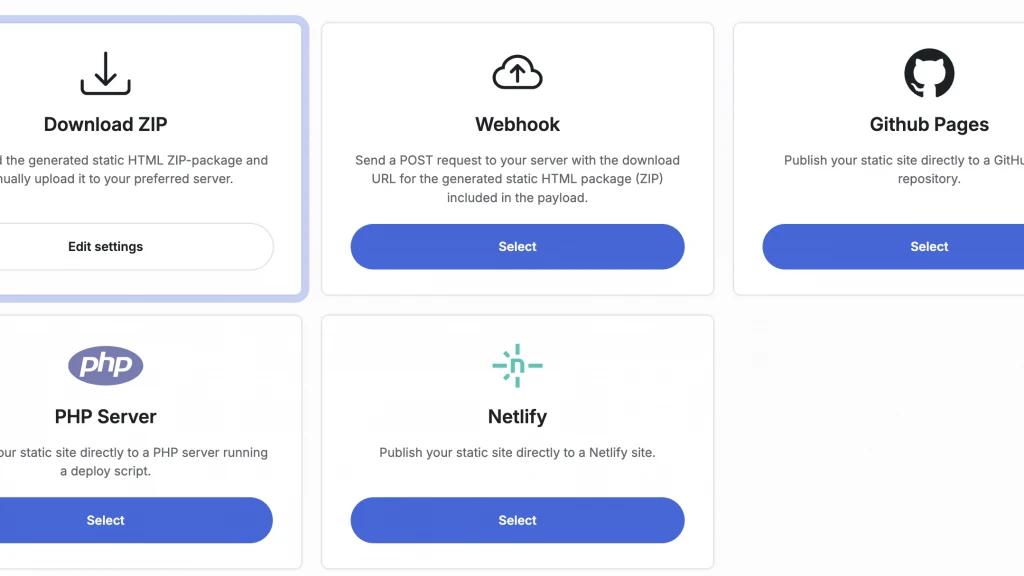
This guide evaluates the major options developers consistently recommend – GitHub Pages, Cloudflare Pages, Netlify, Vercel, and self-hosted setups.
Static website hosting has never been better or more overwhelming. With a dozen platforms offering “free,” “global,” or “edge” hosting, it can be hard to decide which one actually fits your needs. The good news? Static sites are simple by nature, and most hosting platforms now handle the basics incredibly well: automatic deployments from Git, HTTPS by default, reliable global delivery, and zero server maintenance.
Before comparing providers, focus on the core factors that shape your experience:
Most modern static hosts revolve around Git: push changes → rebuild → deploy. If you want this automated pipeline, pick a platform with strong Git integration.
If you prefer to upload files manually or sync via FTP/SFTP, choose a host that supports it, or self-host.
Nearly every major platform now includes free HTTPS certificates and quick DNS setup, but not all handle complex domain configurations equally well.
A global CDN affects how fast your site loads for visitors worldwide. Cloudflare, for example, is known for extremely fast and widely distributed caching.
Look closely at:
A generous free plan can save a hobbyist or freelancer real money.
Do you want a fully managed platform where everything “just works,” or do you want complete control over your hosting, caching, and deployment process?
Ideal for: personal projects, documentation, portfolios, and any site that benefits from being tied directly to a repository.
GitHub Pages remains a favorite because of its simplicity:
It’s not fancy, but it’s extremely stable and friction-free. For many developers, that’s the whole point.
Pros
Cons
Bottom line: If your site is small and straightforward, GitHub Pages is hard to beat.
Ideal for: anyone who wants speed, global distribution, and a modern Git-based workflow.
Cloudflare Pages has become a top pick because of its performance and developer experience:
Many developers call this their “go-to” static host simply because it’s fast and effortless.
Pros
Cons
Bottom line: If raw speed and CDN quality matter, Pages is one of the strongest choices available.
Ideal for: users who want easy Git-based deployments plus extras like identity, and redirects.
Netlify helped popularize the modern static hosting workflow. It strikes a balance between simplicity and capability:
It’s friendly for personal sites, marketing sites, and multi-environment builds.
Pros
Cons
Bottom line: A polished, reliable platform with excellent tooling for static and “static-plus” sites.
Ideal for: developers who want a polished Git-driven workflow with previews and automated pipelines.
While often associated with dynamic frameworks, Vercel also hosts static sites extremely well. Many users choose it simply for the smooth workflow: “My workflow is repo-based… each commit triggers an automatic build and deployment through their pipeline.”
If a seamless Git → build → deploy process matters to you, Vercel does it extremely well.
Pros
Cons
Bottom line: A refined solution for anyone who wants deployments handled beautifully.
Ideal for: developers who want full control or the simplest possible upload workflow.
Self-hosting can mean:
This last option still has fans because it’s so direct: build → scp → done.
Pros
Cons
Bottom line: Great for power users and organizations with specific constraints.
Here's our subjective suggestion:
| Priority | Best Match |
|---|---|
| Free, reliable, minimal setup | GitHub Pages |
| Best global performance | Cloudflare Pages |
| Easy Git-driven workflow with extras | Netlify |
| Polished developer experience | Vercel |
| Full control, no dependence on a vendor | Self-hosting |
One of the greatest advantages of static websites is freedom: Freedom from vendor lock-in, from proprietary site builders, from platform-specific constraints, and from frameworks that require a particular hosting provider just to function. A static site, at its core, is pure HTML, CSS, and assets. That means you own it fully and can host it wherever you want, now or later.
A portable static site starts with a clean, version-controlled repository. Git, whether hosted on GitHub, GitLab, or elsewhere acts as the home for your website’s content and code.
Static sites are fast, secure, and incredibly flexible. But even more importantly, they embody a principle: your website should belong to you, not to your hosting provider or website builder.
By choosing the right hosting platform (any of the above) and building your website with static files (by hand or with flipsite) you will have sites that:
This call to action text is generated by AI – because when you run out of ideas on what to do, Flipsite's AI engine will help you drive conversion!
Create account©2025 Flipsite. All rights reserved.